
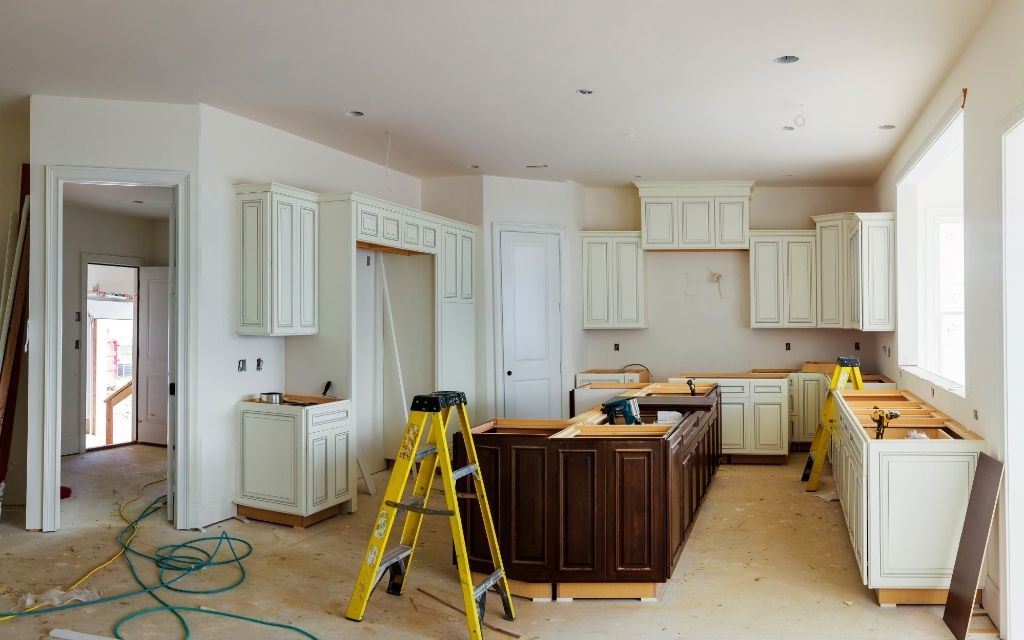
Open Concept or Defined Spaces? Navigating Lifestyle Differences in Home Design
One of the most common conversations we have with homeowners planning a renovation or custom home in North Vancouver revolves around a surprisingly simple question: should the home feature an open-concept layout or more defined spaces? While it may seem like a design decision, it often reflects much deeper lifestyle preferences and daily habits.
For years, open-concept living dominated home design trends. Large, connected spaces offered flexibility, natural light, and easier interaction between family members. More recently, however, there has been a growing appreciation for defined rooms that provide privacy, focus, and separation between different activities. Neither approach is inherently better. The right answer depends entirely on how a household lives, works, and spends time together.
What makes these decisions genuinely challenging is that people within the same home often have different priorities. One person may love the openness and social energy of a large, shared space, while another craves quiet areas to work, relax, or step away from the activity of the day. As specialists in home remodeling in North Vancouver, we regularly help homeowners navigate these differences and create layouts that support everyone’s needs without forcing an all-or-nothing decision.
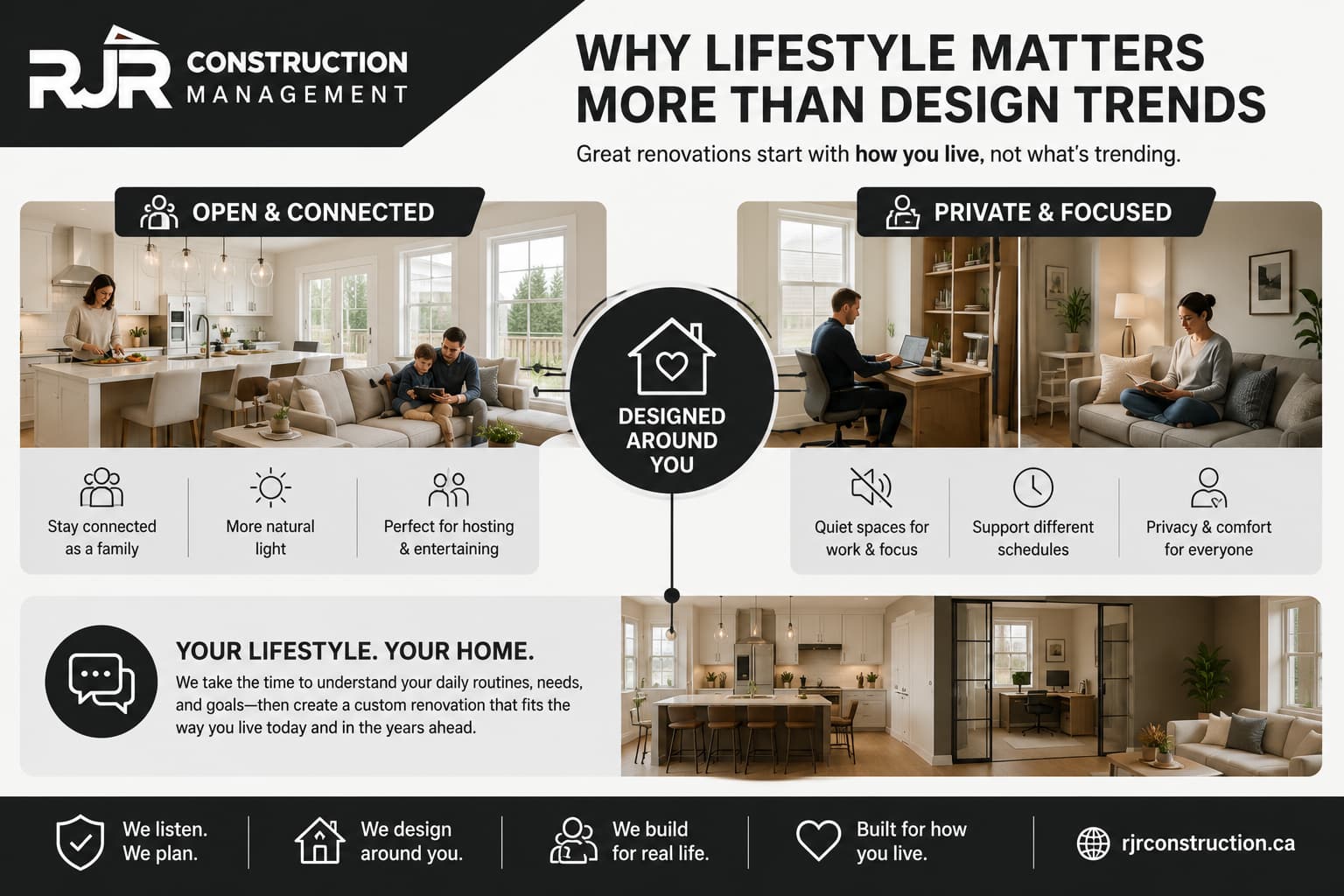
Why Lifestyle Matters More Than Design Trends
When homeowners begin planning a renovation, it is easy to focus on images from magazines, social media, or home renovation shows. While inspiration has its place, we encourage clients to start with something more grounding: how they live.
An open-concept layout works exceptionally well for some families. Parents can prepare meals while staying connected to children nearby. Entertaining becomes easier, natural light flows throughout the home, and spaces often feel larger than their square footage suggests. For homeowners who enjoy hosting or spending time together in shared spaces, this kind of layout can be a natural fit.
At the same time, many homeowners discover that completely open spaces do not always support their daily routines. As remote work has become more common, the need for quiet areas dedicated to focused work and video calls has grown considerably. Families with different schedules may appreciate spaces where one person can relax while another works on a project or watches television without disruption.
These preferences are rarely about design alone. They reflect how people recharge, communicate, and move through their days. One homeowner may view walls as barriers, while another sees them as opportunities for privacy and comfort. Neither perspective is wrong. The challenge is finding a design solution that genuinely respects both.
This is why we spend considerable time discussing lifestyle before discussing floor plans. Understanding daily habits often reveals opportunities that homeowners had not initially considered. Rather than choosing between fully open or fully defined spaces, there are usually creative solutions that draw on the strengths of both.
Finding Practical Design Compromises That Actually Work
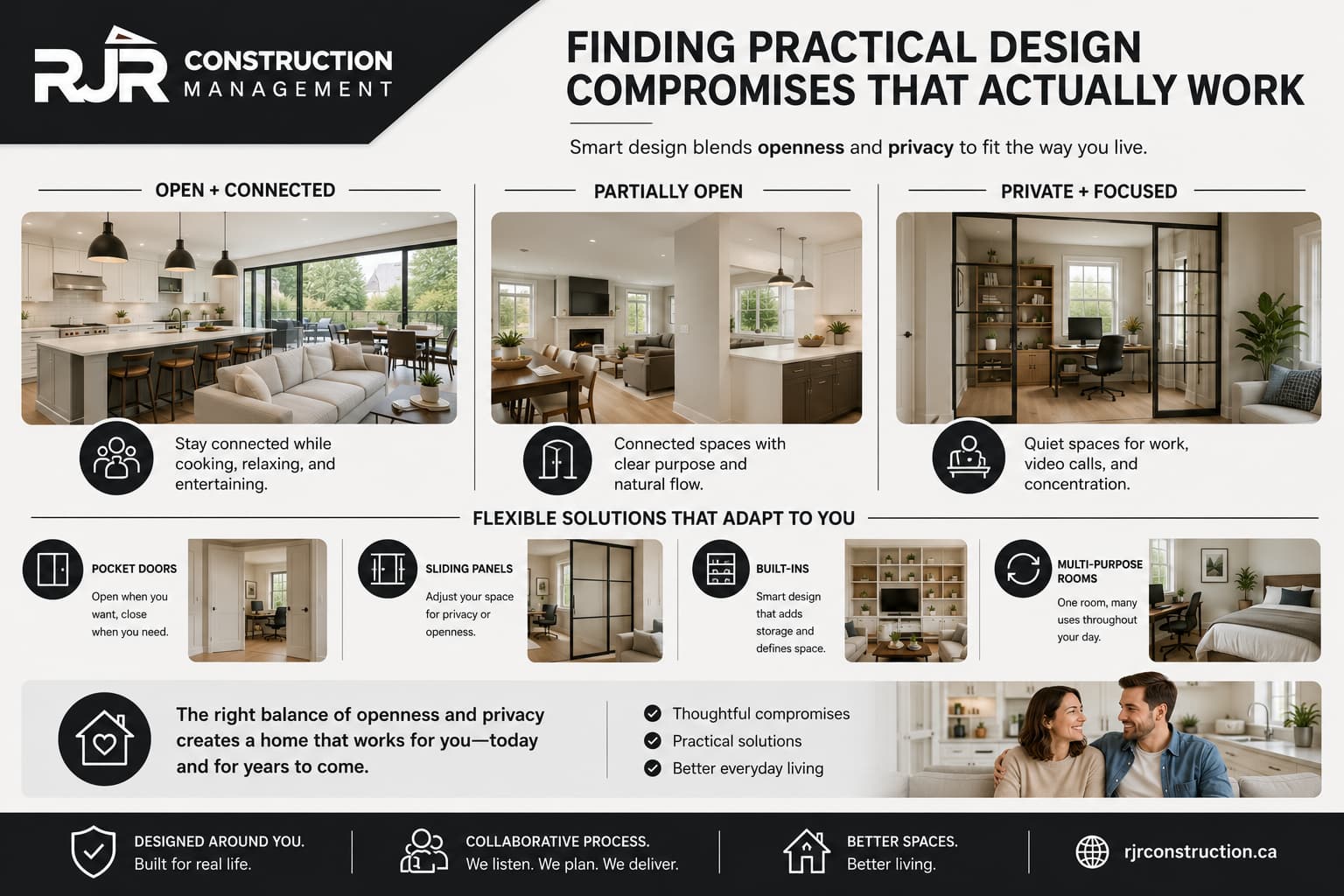
One of the most common misconceptions in home design is that homeowners must choose a single layout philosophy and commit to it entirely. Many of the most successful custom home layouts we have created blend openness and separation in thoughtful, flexible ways.
We have worked with homeowners who wanted an open kitchen and living area but also needed a private workspace. Rather than creating a separate office disconnected from the rest of the home, we designed flexible spaces with glass walls and doors that maintain visual connection while meaningfully reducing noise.
In other projects, partially open layouts have worked well, where generous openings connect rooms without fully removing their boundaries. This allows natural light and conversation to flow freely while still giving each area a clear sense of purpose. Pocket doors, sliding panels, and well-placed built-ins can also provide useful flexibility, allowing spaces to feel open when desired and more contained when needed.
There is also growing interest in multi-purpose rooms that adapt throughout the day. A space that functions as a home office during work hours might become a guest room or hobby area in the evening. These solutions are particularly valuable in North Vancouver homes where maximizing functionality often matters more than simply adding square footage.
The goal is never to steer homeowners toward a particular trend. It is to create a home that genuinely supports how they live. By exploring practical compromises, homeowners often find they can enjoy the benefits of both openness and privacy without sacrificing either.
Designing Around People, Not Just Floor Plans
At RJR Construction, we believe the best home designs begin with understanding people rather than architectural styles. A successful renovation is not measured by how closely it follows a trend. It is measured by how well it supports the people who live there every single day.
When homeowners disagree about layouts, they are usually expressing different lifestyle needs rather than conflicting design preferences. One person may value connection and shared experience, while another values focus, quiet, and personal space. By identifying those underlying priorities, we can develop solutions that address both perspectives thoughtfully.
This collaborative approach is especially important during home remodeling projects in North Vancouver, where every home presents its own unique opportunities and constraints. Rather than presenting homeowners with a limited set of choices, we focus on creating layouts that feel personalized, practical, and flexible enough to evolve as life changes.
The most successful custom home layouts are rarely entirely open or entirely closed. They are thoughtfully designed around how people live, work, entertain, and rest. When lifestyle becomes the foundation of the design process, homeowners gain more than a beautiful space. They gain a home that truly supports the way they want to live.
If you are considering a renovation or custom home project in North Vancouver and are unsure whether an open-concept layout or more defined spaces are right for you, we would be happy to help. Reach out to RJR Construction to start a conversation about designing a home that reflects your lifestyle, your priorities, and your future goals.